


In the threefold world,
Chapter 16 of The Lotus Sutra, The Life Span of the Buddha
there is neither
birth nor death,
or going away nor coming forth,
and there is no existing in this world
and later entering extinction.
It is natural to fear that which we have never experienced before. Especially when it comes to “death.” One of the primary reasons for this stems from the fact that we cannot truly know what death is like until it actually occurs. Of course, you can ask others who have had a near-death experience. You can read about it. But until it is your time, all we can truly rely upon are the words of the Buddha. The aforementioned text of the Lotus Sutra explains death quite well, and from this, we know that the end of life is simply a natural transition. Our souls are everlasting. Death is simply the demise of the flesh. And after we die, our souls continue on, dwelling in another body; another life. It is much like checking out of one lodge and checking into another.
When our physical condition starts to deteriorate as we become older, it will be harder for us to live with the same vitality and strength that we once had. The body eventually gets weak, and begins to decline. There are some who are so energetic (even though they are in their eighties or nineties), but nevertheless, their bodies too will gradually enter this period of decline. In order to rejuvenate our bodies and keep living our “real life” (as souls now and forever), there is “death” (rebirth) of a body. Understanding death in this way, we recognize death as the start of a new life, not necessarily the end. Death is not a horrible thing. It is simply the way of things. We continue on after this Earthly life, which should give us hope and add to the beauty of the movie that is our lives. Viewing death as something to be feared is of no use. For if we choose to live in fear of death, how can we truly enjoy life now and, prepare for our transition after this life is over? It is how we live our lives now that matters the most.
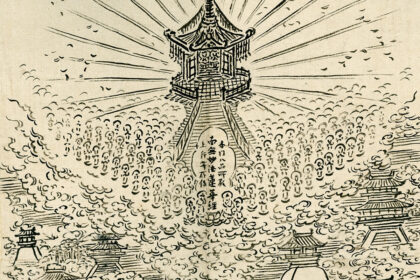
Since the practitioners of the Lotus Sutra (HBS members) accumulate a wealth of merit during their lifetime by dedicating themselves to saving people in the Saha world, they are supposed to visit the Pure Land of Tranquil Light (Jakkōjōdo) where Buddhas and Nichiren Shonin are waiting for us. After taking a rest for a while in the Pure Land, they start to prepare for their next trip to the Saha world where they will select the timing to be reborn as human beings (bodhisattvas) in order to save people again with the teachings of the Lotus Sutra (Odaimoku—Namu Myōhō Renge Kyō).







Very interesting. I thought that Buddhism does not believe in a “soul” – the concept of no-self (anatta). Does HBS or Nichiren Buddhism in general believe in a soul?
Thank you very much for your question. I think it is a very important point.
You are correct that Buddhism teaches “no-self” (anatta). Therefore, it would not be accurate to say that Buddhism teaches the existence of an eternal, unchanging, independent soul.
At the same time, however, Buddhism does not teach that everything simply disappears at death.
Our body, feelings, thoughts, and consciousness are constantly changing. For this reason, Buddhism does not accept the idea of a permanent, fixed self that always remains exactly the same. At the same time, our life continues through causes, conditions, and karma, and this continuity extends beyond birth and death.
When I use the word “soul” in my article, I do not mean an eternal and independent substance in the sense that the word is sometimes used in Western religion or philosophy.
Rather, I use “soul” as a convenient word to express life itself, or the continuity of life, which goes beyond the temporary physical body and continues through repeated birth and death.
I often explain the relationship between the body and what I call the “soul” by using the example of an actor and a role.
The body is like a temporary role that we are given in this lifetime. What I call the “soul” can be compared to the actor who plays that role.
However, even this “actor” should not be understood as something eternally fixed and completely unchanging. It is continually shaped by causes, conditions, karma, experience, and spiritual practice, while continuing as a stream of life beyond birth and death.
So, the Buddhist teaching of no-self and my use of the word “soul” do not necessarily contradict each other.
“No-self” means that there is no eternal, fixed, independent self. It does not mean that Buddhism denies the continuity of life, karma, and cause and effect beyond a single lifetime.
In Honmon Butsuryū-shū, and in Nichiren Buddhism more broadly, we understand life and death through the teachings of the Lotus Sutra. Life and death are not completely separate realities. They are different phases within one greater continuity of life.
When this present life ends, everything does not simply become nothing. Life continues according to causes and conditions. How we live, what actions we take, and how we practice faith in this lifetime are therefore not without consequence.
In HBS, we believe that by chanting Namu Myōhō-Renge-Kyō, we plant and cultivate the cause of Buddhahood within this continuing stream of life.
So, to put it simply:
Buddhism does not teach an eternal, unchanging, independent soul. However, it does teach a continuity of life beyond birth and death. I use the word “soul” as a simple way of expressing that continuity of life.
Thank you again for such a thoughtful question. The English word “soul” carries strong religious and philosophical meanings, so when explaining Buddhism in English, I think it is important to use the word carefully in order to avoid misunderstanding.
Thank you very much for your reply. _/\_
In HBS, do you pray for deceased family members? Do you believe that the deceased see or hear you in the after life? Example: what would a HBS member tell their child after their grandmother passed away… do you pray for her? will they ever see her again? Does she hear their prayers?
Of course, we pray for deceased family members.
Even after the physical body of a loved one has passed away in this lifetime, their life does not simply disappear. From the world after death, they may still be able to see us, hear our voices, and receive our feelings.
I also have a young daughter, and if their beloved grandmother were to pass away, I would probably tell her:
“Grandma is still watching over you. Your thoughts and your voice can reach her. So let’s chant the Odaimoku together for her.”
However, by our own human power alone, we cannot truly send a meaningful “gift of gratitude” to someone who has passed away. That is why we chant Namu Myōhō-Renge-Kyō, rely on the power of the Buddha, and dedicate the merit of our chanting to the deceased. This is one form of memorial offering in HBS.
There is also another way to make our deceased family members happy: to live properly and sincerely as a human being.
To live properly means to be kind to others and to bring happiness to others. Put simply, it means trying to live like a “living Buddha (in a truly compassionate way),” or living a life in which we continue to accumulate good deeds.
True merit is created when we sincerely care for people who are suffering, sit beside them, listen to them, and do what we can to help them.
And who made it possible for such a good person as you to exist? Your parents, your grandparents, and all of your ancestors before them, who continued passing the gift of life from one generation to the next.
You exist because of them.
Because of this deep connection of cause and effect, part of the merit you create through your good actions naturally reaches your ancestors as well.
In fact, this is one of the truest forms of memorial offering. Living a good life, helping others, and creating merit is one of the greatest ways to repay our gratitude to our ancestors and to bring them joy.
However, what I said at the beginning does not mean that every deceased person is always able to watch over us at any time. The subject of the soul, the afterlife, and the condition of life after death is actually much deeper than that.
This comment is already becoming rather long, so I will stop here. If you would like to know more, I would be very happy to explain it to you personally.